Our Blog

Speech! Speech!

May 27th, 2024

If you are a student of Speech or Drama, you know how important it is to be clear and articulate. You’ve worked on pronunciation and projection, and the audience in the back row can understand every word.

And now you’ve gotten braces, and, suddenly, you don’t sound quite like yourself. Why? And, more important, what can you do?

  • Don’t Panic!

Many patients see no change at all in their speech after getting braces. With some orthodontic conditions or appliances, you might have problems pronouncing certain sounds, but these changes in articulation are usually quite temporary. 

  • Why Are You Sounding Off?

Every consonant is formed in a precise way as tongue, lips, and teeth work together. If you have brackets and wires in the way, or just got a new retainer, or have a set of aligners, you might find that your articulation is a little off, especially for sibilant sounds such as S’s and Z’s. Luckily, we humans are a flexible bunch, and it usually takes a very short time for our tongues and mouths to adapt to orthodontic appliances and return to normal pronunciation.

If your speech is affected at first because your lips and cheeks are sore or sensitive after getting braces, take time to take care of yourself! Use wax as often as needed to cover irritating brackets and wires, eat foods that are low in salt, spice, and acids, and follow your orthodontist’s instructions for taking care of your mouth. You should start feeling better within a few days, and should be fine after a week or two. If pain or discomfort persists, call your orthodontist.

  • Practice Makes Perfect

If you want to speed along the process of getting back to your normal pronunciation habits, practice! Read aloud, sing along to your favorite songs, recite lists of words with the specific sounds you want to work on. Oddly enough, to get back to your normal speech more quickly, slow down. Thinking before you speak is never a bad idea, and, in this case, thinking while you speak can help you position your tongue and mouth to verbalize tricky sounds more easily.

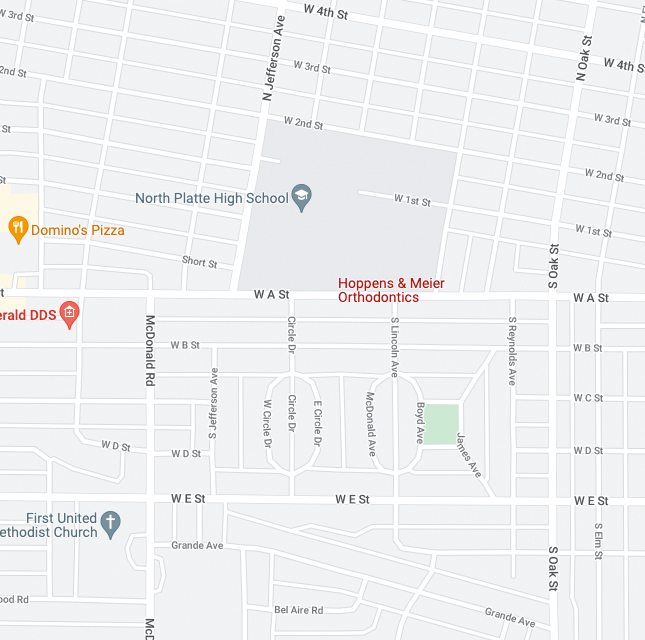
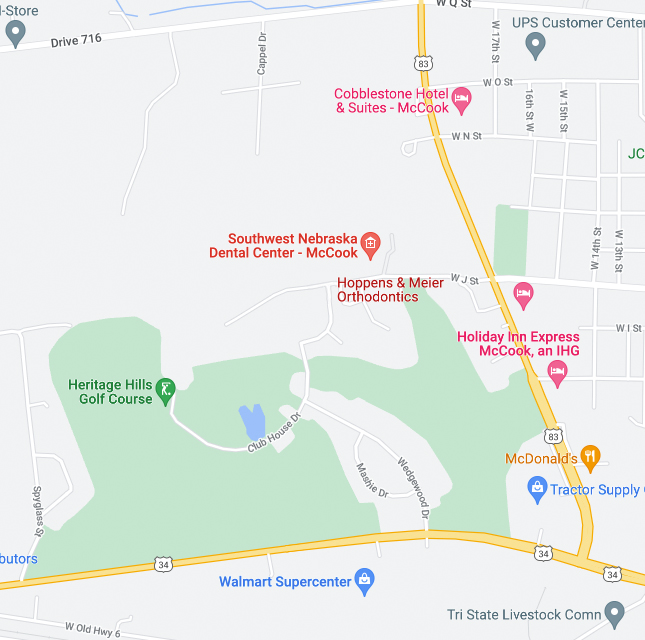
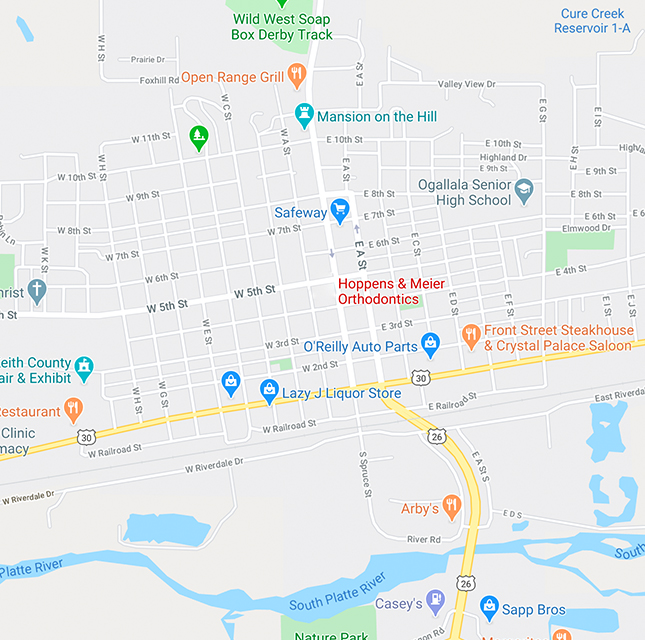
You don’t have to be a national debate champion or the world’s most blood-curdling Lady Macbeth to be concerned about clear speech. Talk to Dr. Bradley Hoppens and Dr. Mary Beth Meier during your next appointment at our McCook, North Platte, or Ogallala office if you find you are having problems with pronunciation. Whether your appliance needs an adjustment, or you need a few suggestions for speech exercises, or it’s simply a matter of time, soon you’ll be back on the road to perfect pronunciation—and on the way to your perfect smile.

Are you visiting the dentist during your orthodontic treatment?

May 8th, 2024

If you’re brushing your teeth twice a day during your orthodontic treatment, Dr. Bradley Hoppens and Dr. Mary Beth Meier and our team think that’s wonderful! But, don’t forget that it’s also important for you to visit your general dentist every six months, or as recommended, in addition to brushing your teeth and flossing. (And visiting Hoppens & Meier Orthodontics for regular adjustments, of course.)

Dental checkups are crucial for maintaining good oral health. Your general dentist can check for problems that might not be seen or felt, detect cavities and early signs of tooth decay, as well as catch and treat oral health problems early. During an oral exam, your dentist can also check the health of your mouth, teeth, gums, cheeks, and tongue. Checkups will also include a thorough teeth cleaning and polishing.

If you have not been to the dentist in the last six months, let us know during your next adjustment visit and we will provide a few great references in the McCook, North Platte, or Ogallala area!

Spring Cleaning

May 1st, 2024

Just like that, it’s almost summertime. As the spring season ends, perhaps these lighter, brighter days are inspiring you to do a bit of last-minute spring cleaning. Or perhaps they’re not. No judgment here!

What Dr. Bradley Hoppens and Dr. Mary Beth Meier can recommend wholeheartedly is finishing the season with a clean, sparkling smile. And we have some bright ideas for you!

Refresh Your Cleaning Technique

Tooth brushing can become so automatic that we don’t think about the basics anymore. And suddenly, we’ve finished brushing in half the time we used to, and, hey, how long has that floss been sitting on the counter, anyway?

Now that you’re in orthodontic treatment, it’s more important than ever to keep your teeth their cleanest:

  • Plaque acids can strip minerals from your teeth. If you don’t clean around your brackets thoroughly, plaque buildup can leave discolored spots on your enamel.
  • If a cavity develops, treatment could require removing part of your braces. This means extra appointments and a delay in your orthodontic schedule.

So, let’s review the brushing basics for a clean and healthy smile.

  • Spend two minutes brushing, at least twice each day. Dr. Bradley Hoppens and Dr. Mary Beth Meier might suggest brushing after every meal to make sure food doesn’t stick to your teeth and braces.
  • Make sure you reach all the surfaces of your teeth, inside, outside, and on top of your molars.
  • Use short, gentle brush strokes, covering a tooth or two at a time.
  • Angle your brush to clean along the gum line. Plaque around the gums leads to irritation and inflammation, and is a common cause of gum disease.
  • Use vertical strokes to clean the inside of your front teeth.
  • Floss at least once each day, or as recommended by your orthodontist.

Special Jobs Require Special Tools

Since we’re tidying up, let’s talk about some helpful cleaning tools. The right tools make removing plaque a lot easier.

  • Toothbrushes

There are toothbrushes designed especially for braces, with angled heads, longer handles, and different bristle arrangements. Whether you try a new design, or stick with your old favorite, replace your brush whenever necessary.

After three to four months of brushing, your toothbrush bristles start to break down. Frayed and matted bristles can’t clean as effectively as a toothbrush in top shape. Electric toothbrush heads can wear down more quickly because they often have shorter bristles. Each change of season is a good time to remind yourself to change brushes.

Extra tip: Buy a brush with soft bristles. Even medium bristles can cause enamel abrasion.

  • Floss Upgrades

If you wear braces, check out the floss options made just for you. Floss threaders help you thread floss under wires. Or try floss which comes in pre-cut strands with a stiff tip to thread the floss through wires more easily. You might find that an orthodontic flosser, a small piece of floss attached to a thin plastic handle, is the easiest way to clean between your teeth. Experiment until you find your most convenient and effective floss.

  • Interproximal Brushes

These tiny cone-shaped brushes fit snugly and comfortably between the spaces of your teeth to remove plaque.

  • Water Flossers

Water flossers are high-tech tools that use a pulsing stream of water to clean between and around the teeth. They’re particularly helpful if you have traditional or lingual braces.

Your Dr. Bradley Hoppens and Dr. Mary Beth Meier can suggest the best tools for the cleanest teeth. And speaking of your dental team . . .

Some Cleaning Jobs Require Professional Help

Wearing braces doesn’t mean you should skip cleanings—in fact, it’s more important than ever to make sure that all the plaque that has built up around brackets and wires is removed. Your hygienist knows how to work with your braces for an effective and braces-friendly cleaning.

Spring’s coming to an end, but taking care of your dental health is always in season! A clean smile isn’t just a more confident smile, it’s a healthier one. Talk to our McCook, North Platte, or Ogallala team for more tips to create your best and brightest smile at any time of year.

Plaque Attack? Let’s Fight Back!

April 24th, 2024

Plaque is a sticky subject! It sticks to the enamel of our teeth above and below the gum line, and it collects around braces. Plaque is one of the major causes of tooth decay and gum disease, and our teeth are under daily attack by this filmy menace.

What are the facts about plaque, and how can we fight back? Read on for some effective strategies!

What Is Plaque?

Plaque is a sticky film that builds up on our teeth, largely made up of millions of different types of oral bacteria. Plaque is a colorless biofilm at first, but as it collects, it takes on a white or yellow tint. If you haven’t brushed for a few days, that fuzziness you feel on your teeth is plaque build-up. Unless it’s removed, plaque hardens within a matter of days to become tartar.

  • Tip: You can remove plaque with careful brushing and flossing, but it takes a dental professional to remove tartar. Be proactive!

Why Does Plaque Cause Cavities?

Bacteria in plaque use our food as their food, especially sugars and carbs. They can then transform these nutrients into acids, which attack our tooth enamel, weakening it and leaving it vulnerable to further erosion and eventual decay.

  • Tip: Cavities aren’t the only damage caused by accumulated plaque. Plaque also collects along and below the gum line. If tartar forms here, it irritates delicate gum tissue, leading to gingivitis and more serious gum disease. Make sure you don’t forget your gums when you brush and floss.

When Does Plaque Build Up?

The short answer? Plaque is always forming, because oral bacteria are a natural part of our biology. (In fact, there are even oral bacterial which are beneficial.) Plaque starts building up within minutes after eating, and during the night as we sleep.

That’s why we recommend brushing for two minutes at least twice a day, and flossing at least once a day. When you wear braces or aligners, brushing more often is a good idea. Food collecting around braces or inside aligners is a feast for plaque! Ask Dr. Bradley Hoppens and Dr. Mary Beth Meier for suggestions for your best brushing schedule.

  • Tip: Just because plaque is unavoidable, that doesn’t mean we need to give the bacteria in plaque any additional encouragement. Every time you have a meal or a snack that’s heavy in carbs and sugars, you are providing more fuel for acid production. Cutting down on foods like sugary desserts and sodas is not only nutrition-healthy, it’s tooth-healthy!

Where Does Plaque Collect?

Plaque builds up all over tooth surfaces, at the gum line, and even below the gum line. It’s especially easy to miss in hard-to-reach places like the irregular surfaces of molars, between the teeth, behind our front teeth, and near the gum line. Plaque also collects around your braces, and requires special care to make sure your teeth don’t suffer cavities or the white spots caused by demineralization.

  • Tip: One of the ways plaque avoids detection is its invisibility. Fortunately, if you’re having trouble brushing away all your plaque, there are plaque-disclosing toothpastes and chewable tablets available in the dental aisle which reveal the plaque hiding between, behind, or around your teeth by tinting it with a can’t-miss color. Just brush the color away, and you’ve brushed the plaque away as well.

How Do We Clean Away Plaque?

Use the Right Tools

Floss at least once a day. There are different materials, sizes, and coatings for floss, so you can find one that’s comfortable for you. Floss reaches those spots in between teeth and around the gum line that brushes miss.

Choose a soft toothbrush (soft bristles are better for your enamel) and change it every three to four months, or as soon as the bristles show wear. Make sure the head is the right size—too big, and it’s not only uncomfortable, but you won’t be able to reach all the surfaces you need to.

  • Tips: There are special dental flosses created just for your braces. You can also use interproximal brushes water flosser to clean around wires and brackets. If you have trouble removing plaque around your teeth and braces with a manual toothbrush, consider an electric model. Several studies have shown a reduction in plaque with the use of an electric brush.

Use the Right Toothpaste

There are many toothpastes specifically formulated to fight plaque and tartar. And fluoride toothpastes not only fight cavities, they can strengthen your enamel.

  • Tip: Studies have shown that toothpastes with baking soda, in particular, are effective in reducing plaque. Ask Dr. Bradley Hoppens and Dr. Mary Beth Meier for a recommendation the next time you’re at our McCook, North Platte, or Ogallala office.

Use the Right Technique

What not to do?  A forceful, horizontal sawing motion is awkward, hard on your enamel, and misses plaque and debris between the teeth. Technique is important—not for style points, but for cleaner teeth!

Hold your toothbrush at a 45-degree angle, especially at the gum line, to gently remove plaque from teeth and gums. Use short strokes or a circular motion to clean as much of the surface and between the teeth as possible. Brush the inside of your front teeth with careful vertical strokes—remember, that’s one place where plaque is easy to overlook. The same holds true for the tops of your molars, so thoroughly clean those uneven surfaces.

If you wear braces, be sure to clean thoroughly around brackets and wires, where plaque can accumulate quickly.

  • Tip: If you wear clear aligners, don’t forget to give them a gentle brushing as well! Plaque can stick to aligners, causing discoloration and odors, so follow our cleaning instructions carefully.

Who Can Help You Fight Plaque?

Even when you do your best at home, plaque can still be a sticky problem. That’s why we advise regular professional cleanings, which not only remove any plaque that’s hiding away, but also eliminate any built-up tartar around your braces. And, of course, there you can learn all about how to keep your teeth their cleanest.

True, you’re fighting plaque every day, but you have all the tools you need to make sure your teeth and gums stay healthy. You’re winning the battle with plaque every time you eat a nutritious meal, and every time you brush and floss. With that kind of strategy, plaque doesn’t stand a chance. And your bright smile and healthy teeth and gums? That’s a victory worth celebrating!

Our main offices and satellite locations

Contact Us!